 Freedonia
Business is Booming at Hema NB (Super Value)
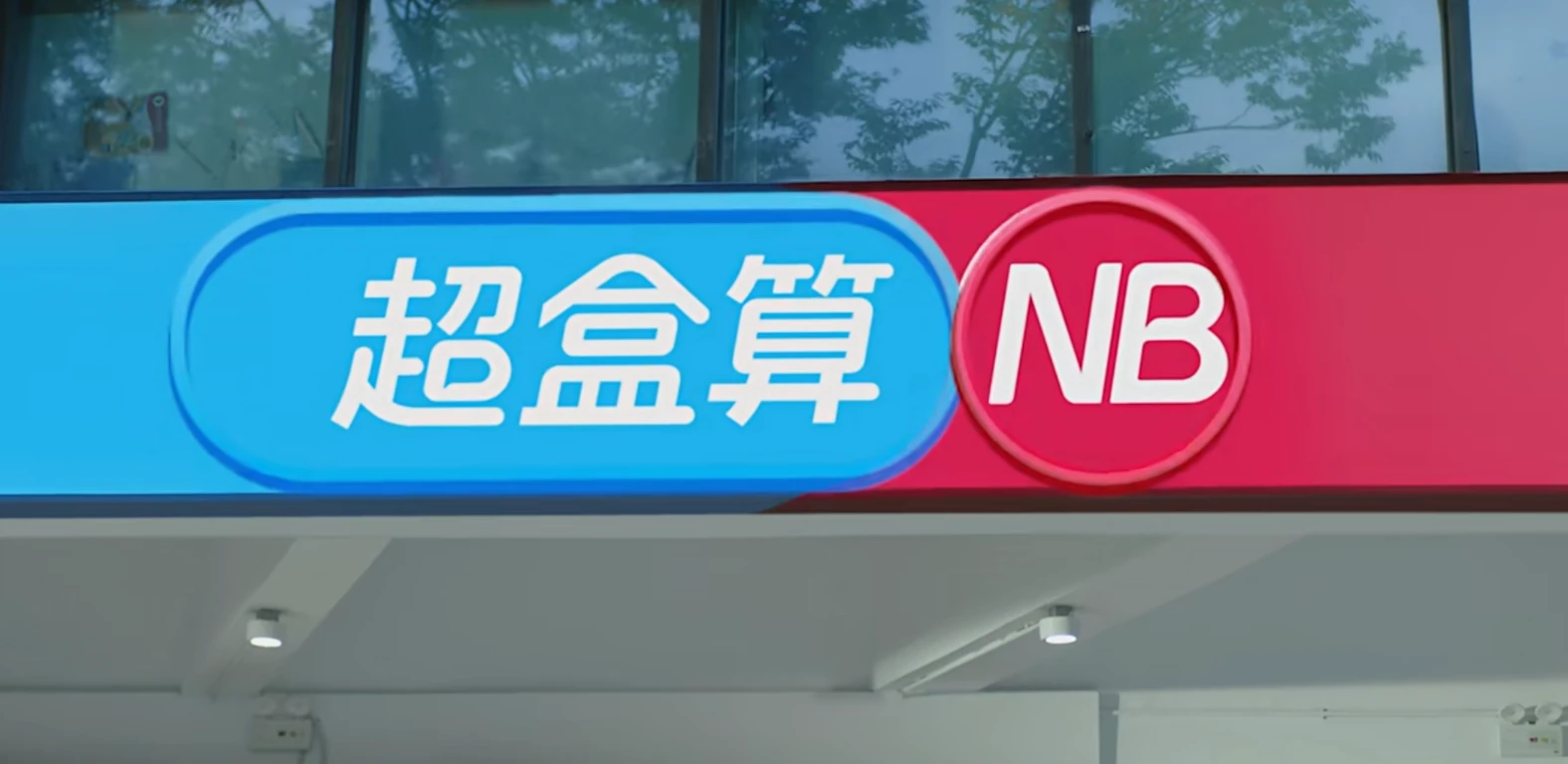
I went to the Hema NB (Super Value) store near my home today. Business was booming; I even had to queue to check out.
In my neighborhood, I have access to Hema, Dingdong Maicai, and Yonghui. Previously, I always ordered Hema Super Value items via the “Taobao Instant Shopping” (Taobao Shangou) interface because of the coupons. However, the delivery was incredibly slow, usually taking over an hour (likely due to a shortage of delivery riders in my area). In contrast, Dingdong Maicai delivers much faster (typically 30 to 60 minutes), but I found that Dingdong’s prices on the Taobao interface are surprisingly higher than on their own app.
Hema NB (Super Value) gives me the impression of a fresh food supermarket that has been stripped of live seafood. It feels like a watered-down version of the classic Hema, cutting out the signature live seafood and in-store cooking services. It seems to be a continuation of the “Hema NB Pickup” model (now that the self-pickup business has been taken offline). It is cheap and offers high cost-performance, though the quality of some items is just average. In terms of quality, I’d rank them: Hema Fresh (Xiansheng) > Dingdong > Hema NB.
What’s confusing is that for Hema NB, which is supposed to be a key developmental business for Hema, the main digital entry point is a WeChat Mini Program (there isn’t even an Alipay Mini Program). Furthermore, it has no relation to the main Hema App (though you can pay with Hema’s payment code and check orders), and it has an independent membership points system. You can place orders via Taobao Instant Shopping, but those orders don’t show up in the main Hema App. This means that customer service for Taobao orders can only be handled through Taobao—the systems are independent and not fully integrated.
I completely don’t get it. Why choose the Tencent (WeChat) ecosystem as the entry point for Hema NB while abandoning their own app? And why isn’t it fully integrated with Taobao Instant Shopping?
Also, regarding Alibaba’s e-commerce integration (renaming Ele.me to Taobao Instant Shopping and merging it into the E-commerce Group), why is Hema left outside to operate independently? Perhaps it’s due to the specific nature of the business—after all, it’s physical retail involving warehousing, logistics, brick-and-mortar stores, inventory, and procurement.
Hema, to me, can be described in one word: “Chaotic.” There are too many formats: Hema Fresh, Hema Mini, Hema Outlet, Hema X Member Store, Hema Market, Hema Neighborhood, Hema NB, Super Value NB, Hema Pick’n Go, Hema Cloud, etc. (There are so many, I can’t even remember them all. I just want to buy groceries; why create so many types?). They are constantly using trial and error, launching new businesses, and often contradicting themselves—taking the X Membership system offline then back online, shifting focus from online to offline, closing Hema Neighborhood/NB Pickup (because they couldn’t beat Pinduoduo’s Duoduo Maicai), and closing X Member Stores. A company like this, with such a fast pace of launching and failing, must place huge pressure on its employees (anyone who has worked in big tech probably understands this well).
The Hema X Membership is the worst value membership I have ever purchased. First, it’s expensive. At 258 RMB, compared to JD Plus at 99 RMB or Dingdong at 108 RMB, it’s truly pricey. Second, the benefits are mediocre. Aside from free delivery, the rest isn’t great. The membership doesn’t waive shopping bag fees, the number of items with “member pricing” is scarce, and the free vegetable perk was changed from “online or offline” to “offline only.” The X Membership is even split into Gold and Diamond versions. There was also the “Yi Shan” (Moving Mountain) price war, where shelf prices were cheaper than member prices. The system was taken offline and only relaunched in 2024.
Is it time to buy Alibaba stock?
I generally don’t use Taobao anymore. My first choice is JD.com (self-operated), and occasionally Pinduoduo. I used to buy from Tmall Supermarket, but I found their packaging consisted of one giant plastic bag with the Tmall logo, which caused the items inside to get crushed. I switched to JD Supermarket because they choose packaging (boxes or bags) based on how fragile the items are. As for delivery speed, in big cities, both offer next-day delivery, and JD can often do same-day delivery.
regarding the “Delivery War,” current market share is: Meituan > Taobao Instant Shopping > JD (according to a recent JP Morgan report). However, I think Meituan and Alibaba will be fighting neck-and-neck for a while. The classic internet strategy is “fatten the pig then kill it” (gain a dominant market share/monopoly, then raise prices). It remains to be seen if the market share bought with subsidies can be sustained once the subsidies stop.
According to financial reports, Meituan’s food delivery business lost 14.1 billion, while Alibaba’s delivery business loss figures are unknown, though the Cloud Intelligence Group saw revenue growth. Alibaba is betting everything on AI—AI Intelligent Cloud, the Qwen (Qianwen) Large Model, and applying AI across various businesses. However, as infrastructure spending on AI increases, the Return on Equity (ROE) of these investments remains to be seen.
Although I am not the one making the waves, I can ride the wind. In this ever-changing era, whether in consumption or investment, maintaining independent thinking is the most important thing.